MENU
Cart Items: 0 View Cart

ISO 9001:2015 CERTIFIED

Nothing Senses Better Than a Dexter Detector

  • Product Finder
  • Technical Library
  • Services
  • Store
  • Contact

News

What is a pyranometer sensor?

September 24, 2024

Radiation received from the sun is the lifeblood of the Earth. Its energy impacts so much on the planet, including weather, climate, agriculture, and numerous environmental processes, from the ocean currents to photosynthesis. Quantifying the amount of solar radiation in a location is crucial for producing data that can help enhance solar power systems, anticipate weather patterns, and better agricultural practices. Pyranometer sensors are designed to provide these measurements, capturing the level of solar irradiance on a planar surface. We’re going to discuss pyranometer sensors in more detail below.

Understanding Pyranometer Sensors

A pyranometer sensor is used to learn about the full amount of solar radiation experienced on a surface. It’s able to deliver this data by quantifying solar irradiance, the level of solar energy that occurs on a surface area at a certain time, through a planar surface by changing the solar radiation into a measurable electrical signal. This technology can assess solar radiation flux density with its 180° field of view angle, offering measurements of the radiation on a wavelength range that falls between 300 – 2800 nm. Pyranometer sensors can be used to quantify the following types of radiation:

  • Near-infrared
  • Ultraviolet
  • Visible light.

Variations of Pyranometer Sensors

There are a variety of pyranometer sensors that can be used for measuring solar radiation. Here are some examples of these tools:

Thermopile Pyranometers

Thermopile pyranometers utilize a glass dome and a thermopile sensor, a component made up of thermocouples that identify alterations in temperature between two surfaces. This tool has an active surface that’s blackened so it can take in solar radiation. There’s also a reference surface, which can be a different thermopile or the casing and body of the pyranometer. Thermopile pyranometers are able to measure solar irradiance through forming a voltage that’s proportional to the differences in temperature amid the reference and active surfaces.

Photovoltaic Cell Pyranometers

Designed to be utilized for photovoltaic applications, photovoltaic cell pyranometers can imitate the spectral response from photovoltaic panels. This means they’re extremely helpful for enhancing solar power systems. They incorporate a small photovoltaic cell that produces electrons when it’s exposed to sunlight thanks to the photovoltaic effect. From there, the cell will generate an electric current that corresponds to the amount of solar radiation it experiences. With the help of a small resistor, the current is changed into a voltage signal. An output is then received in W/m² or millivolts once internal processing is complete.

Silicon Photodiode Pyranometers

Silicon photodiode pyranometers can quantify solar radiation through a silicon photodiode. This is a semiconductor device that produces an electrical current if it’s in contact with light. By applying a photodiode, the incident solar radiation can be changed into an electrical signal relative to the radiation’s intensity. Once the signal has been created, internal circuitry can change it into a measurement.

Selecting a Pyranometer Sensor

Each of these pyranometer sensors have their own individual strengths when being used. For a pyranometer sensor that provides high levels of accuracy and an extensive spectral range, one that offers the majority of the solar spectrum, thermopile pyranometers would be a suitable choice. These types of pyranometer sensors are also less likely to be impacted by temperature alterations and deliver a stable response over extended periods of time, especially in comparison with silicon photodiode sensors.

Ultimately, thermopile pyranometers tend to be the standard for applications in solar energy and meteorology, and can be utilized as calibration references. However, they can be more expensive than silicon photodiode and photovoltaic cell pyranometers. Silicon photodiode and photovoltaic cell pyranometers are also more accessible due to their overall costs and have faster response times than thermopile pyranometers. This speed can help them to catch quick alterations that may occur with solar irradiance.

The Uses of Pyranometer Sensors

With the ability to quantify solar irradiance, pyranometer sensors have become extremely useful tools in a variety of areas. Pyranometer sensors can be applied to:

  • Agriculture: Enhancing planting times to increase yields and surveying light conditions that may impact photosynthesis and crop growth.
  • Weather Forecasting: Providing data in relation to solar irradiance that’s needed in weather forecasting models.
  • Solar Energy: Confirming which sites could contain solar installations.
  • Building Designs: Ensuring buildings have an energy-efficient design through evaluating their solar exposure.

Make Your Measurements Count With Pyranometer Sensors

Pyranometer sensors are the tools to use for ascertaining information about the solar radiation of a specific location. Consider the variations of pyranometer sensors carefully. Depending on the sensor chosen, your selected pyranometer sensor may suit certain applications more than others. Thermopile pyranometers are for those who require an increased spectral range and levels of accuracy. On the other hand, photovoltaic cell pyranometers and silicon photodiode pyranometers may be better for those searching for a less expensive option with quick response times.

You can rely on Dexter Research Center to help you find a product for detecting solar radiation. It’s time to apply our equipment, such as our thermopile detectors, to your research to build up your data surrounding solar radiation and use it to its fullest potential.
Key Applications of NDIR Sensors

September 11, 2024

Gas sensing spans various technologies. These include electrochemical, PID, and MOS sensors which each offer distinct advantages in terms of sensitivity, range, and application. Infrared (IR) sensors, for example, excel at detecting gases with specific absorption bands (i.e., CO2). Yet they often lead to greater system complexity. Conventional IR sensors use a prism or diffraction grating to break broadband infrared light into its constituent wavelengths—and these added optical elements generally increase the sensor’s size and cost.

Non-dispersive infrared (NDIR) gas sensors are the preferred solution for cost-effective, highly selective gas sensing. They use an optical filter instead of a dispersive element to process infrared radiation, allowing for greater compactness of design without compromising the integrity of the detector output.

Air Quality Monitoring

NDIR sensors are widely used to monitor the concentration of gases such as carbon dioxide (CO2), methane (CH4), and nitrogen dioxide (NO2) in the atmosphere. Their ability to detect these gases with precision makes them a key component in both indoor and outdoor air quality monitoring systems. This is particularly important in densely populated areas and industrial zones where air pollution is a significant concern.

For instance, NDIR sensors continuously track CO2 levels in indoor air quality systems to ensure a healthy and comfortable environment. This helps maintain adequate ventilation in offices, schools, and hospitals, contributing to better health outcomes and productivity.

Industrial Process Control

In industries such as chemical manufacturing, NDIR sensors play a crucial role in maintaining optimal gas levels during production processes. These sensors help ensure that gas concentrations stay within safe and effective ranges, preventing malfunctions, ensuring product quality, and maximizing efficiency.

Emissions Monitoring

With increasing global attention on climate change, industries are under pressure to monitor and reduce greenhouse gas emissions. NDIR sensors are commonly used in emissions monitoring systems to detect gases such as CO2 and CH4, both of which are significant contributors to global warming. These sensors provide real-time data on gas concentrations, enabling industries to comply with environmental regulations and reduce their carbon footprint.

By incorporating NDIR sensors into their emission control strategies, companies can detect leaks and minimize their environmental impact, all while optimizing their operations to improve sustainability.

Safety and Security

Safety is paramount in industrial and residential environments, and NDIR sensors are an integral part of safety systems designed to detect gas leaks, fire hazards, and other potential threats. Their ability to identify harmful gases quickly and accurately makes them a vital tool in enhancing safety protocols.

Fire Suppression Systems

Fire suppression systems often rely on NDIR sensors to detect the presence of gases associated with combustion. By identifying these gases early, the system can trigger alarms and activate suppression mechanisms before the fire spreads, thereby protecting people, property, and equipment.

This application is particularly useful in environments such as oil refineries and chemical plants, where early detection of flammable gases like propane and methane is critical to preventing catastrophic fires.

Home and Workplace Security

In residential and commercial settings, NDIR sensors are used in systems designed to detect hazardous gas leaks, such as carbon monoxide (CO). These sensors provide continuous monitoring, alerting occupants to potential dangers and ensuring timely evacuation or mitigation measures.

By using NDIR technology, these systems offer a reliable solution for safeguarding both people and assets, whether in a home, office building, or industrial facility.

Temperature Measurement

Apart from gas detection, NDIR sensors, particularly infrared thermopile detectors, are widely used for non-contact temperature measurement. This application is invaluable across a range of industries where temperature control is essential.

Industrial Processes

In industrial settings, NDIR thermopile detectors allow for precise temperature measurements without requiring physical contact with the equipment. This non-invasive method is particularly useful in hazardous or difficult-to-reach areas, where traditional temperature sensors might not be viable.

Medical Diagnostics

The COVID-19 pandemic highlighted the importance of non-invasive temperature screening methods. NDIR sensors have been widely used in infrared thermometers and thermal imaging systems to detect fever, a common symptom of many infections. Their ability to provide fast, accurate, and non-contact measurements makes them ideal for use in medical diagnostics and public health monitoring.

Food Safety

Temperature control is crucial in the food industry to ensure product safety and quality. NDIR sensors are used to monitor temperatures during the processing, storage, and transportation of food products. By ensuring that food is kept within safe temperature ranges, these sensors help prevent spoilage and contamination, ultimately protecting consumers from foodborne illnesses.

Closing Thoughts

NDIR sensors have proven indispensable across a wide range of industries, from industrial process control and environmental monitoring to safety systems and temperature measurement. Their ability to detect specific gases with high accuracy and reliability makes them a key player in improving safety, efficiency, and sustainability. As industries continue to evolve, the applications of NDIR sensors will only expand, driving further innovation and environmental responsibility.

By integrating NDIR technology into their operations, companies can stay at the forefront of industry trends, ensuring both safety and compliance while enhancing productivity. As a leader in NDIR sensor technology, Dexter Research remains committed to providing cutting-edge solutions for a cleaner, safer, and more efficient future.

Why passive infrared is ideal for motion sensor units

September 6, 2023

A motion sensor unit is used to monitor an area and send an alert if movement occurs. Modern motion sensors have a variety of uses, ranging from security to saving energy in lightbulbs. To do this, the motion sensor unit can incorporate passive infrared sensors.

Passive infrared detects temperature. It looks for infrared light through heat. All objects give off some form of heat, so the detector can use this thermal information to distinguish changes through infrared radiation.

Motion sensor units that utilize passive infrared can be used in dark or light environments. They are extremely useful because they can distinguish thermal information from animals, people and even objects.

At Dexter Research Center, we pride ourselves on our high-performance infrared technology. If you are interested in a motion sensor unit that uses passive infrared, make sure to look at our presence sensor that can be found in our specialty items.

With that said, let’s find out more about why passive infrared can be utilized within a motion sensor unit.

How does passive infrared work in motion sensor units?

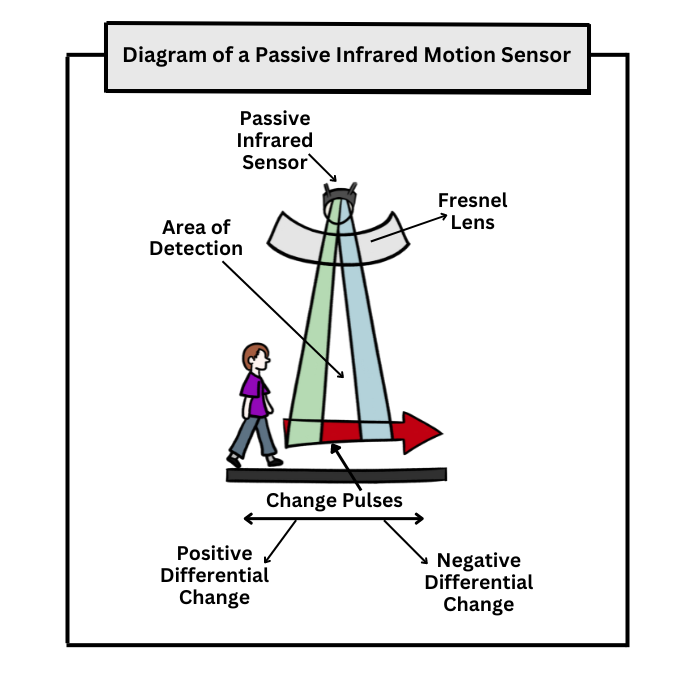
To use passive infrared sensors effectively, a motion sensor is designed with two units. Both of these units have a material in them that protects its sensor and reacts to infrared radiation. There is also a lens to help improve the sensor’s overarching focus.

When an environment is consistent or still, the passive infrared sensors will stay idle. This is because they will sense that the infrared is at a balanced level. For instance, it may detect a level of infrared from furniture or interior items.

However, if movement occurs from a heat source, the passive infrared sensors will detect it. When a person passes by the first sensor, it will cause an increase in temperature. This is known as a positive differential change. But then, as the person leaves the area, the temperature will drop. This is known as a negative differential change. The change will then create an alert signal.

Can passive infrared sensors help motion sensor technology?

Passive infrared can enhance motion sensor technology in a range of different industries. For security, passive infrared motion sensors can be used for entry control and exit control, which is why they can be incorporated into security lighting circuits or alarms.

Additional benefits include:

Being easy to use in internal, external, dark or light environments
Creating bespoke control patterns
Utilizing movement rather than a position to provide a security risk alert
Only using a small amount of energy when it is idle
Acting non-invasive as it does not retain personal data

Where else can you use passive infrared sensors?

A motion sensor unit that uses passive infrared is a great addition to an entry control and exit control system. Common forms of passive infrared technology and their benefits include:

  • Automatic lights to ensure energy can be saved when rooms are not being used
  • Temperature control, including thermostats and thermometers, to save energy
  • Automatic doors to help people enter or leave a building and to maintain ventilation
  • Dispensers for soaps, toothpaste and wipes to maintain hygiene

The Motion Detector – Presence Sensor is available at Dexter Research Center

It is important that you have the right security or motion detector installed in your building or home. If you are looking for a passive infrared motion sensor unit, we would recommend that you look at our Motion Detector – Presence Sensor. It has sensing functions for up to two feet and is simple to reconfigure for bespoke use.

Not only is it perfect for subsystems, but it has very few costs and can be used inside a smart home as temperature control or for saving energy. It can also be used for safety and security. Make sure to look at our specialty items page if you are interested in learning more about it.

Our specialists at Dexter Research Center can help you!

We are experts when it comes to infrared and temperature-related technology. So, if you are interested in discovering more of our high-quality products, please feel free to contact us at any time. You can call us on +1 (734) 426-3921 or email info@dexterresearch.com to find out more information.

Where motion sensors factor into exit control

August 25, 2023

Where motion sensors factor into exit control

In optics engineering and security systems, integrating motion sensors into exit control mechanisms has become a pivotal advancement. As the demand for sophisticated security solutions grows, understanding the nuances of how motion sensors factor into exit control is essential for professionals in the field. This article delves deep into the subject, elucidating motion sensors’ technical intricacies and applications in exit control systems.

Motion Sensor Lights: Illuminating Security and Efficiency

Motion sensor lights, often integrated with passive infrared technology, have emerged as a dual-purpose solution for security and energy conservation. When someone enters or exits a room, these lights automatically activate or deactivate, eliminating the need for manual intervention and reducing energy wastage. Moreover, when integrated into a comprehensive access control system, these lights can be programmed to illuminate upon detecting suspicious activity, thereby enhancing the security quotient of the premises.

Motion Detectors: The Vanguard of Home Security

Motion detectors, equipped with advanced motion detection algorithms, serve as the first line of defense in many security systems. Their primary function is to detect unauthorized presence and trigger immediate alerts. For homeowners or facility managers, this means instant notifications if an intruder breaches the premises. Furthermore, when these detectors are paired with professional monitoring services, they send alerts to the user and communicate directly with the monitoring service. This seamless communication alerts emergency services promptly, amplifying the security apparatus.

Reimagining Exit Control: From Push to Exit Buttons to Motion Sensors

Traditional exit control mechanisms, like push-to-exit buttons, have been a staple in security systems for years. However, the advent of motion sensors has revolutionized this domain. These sensors, typically mounted above the door on the interior side of the frame, employ passive infrared or other motion detection techniques to sense movement. When someone approaches the door to exit, the sensor detects this motion and triggers the door to unlock. This hands-free approach enhances user convenience and ensures that doors remain secure, as they can’t be unlocked with conventional methods.

The Technical Edge: Why Optics Engineers Favor Motion Sensors

For optics engineers, the appeal of motion sensors lies in their precision and adaptability. These devices harness the power of passive infrared technology, which detects changes in infrared radiation emitted by objects in their field of view. This technical prowess ensures that the sensors can differentiate between animate and inanimate objects, reducing false alarms and enhancing system efficiency. Moreover, integrating these sensors into a broader access control system allows engineers to design comprehensive security solutions tailored to specific needs.

Embracing the Future of Motion Sensing

Dexter Research has proudly supplied motion sensing detectors for over forty years. We continue to push the boundaries of detection, supplying a range of passive infrared sensors suitable for many applications. Our solutions offer unparalleled accuracy and reliability. For those seeking to elevate their exit control systems, Dexter Research sets the gold standard. Discover the unmatched potential of our low-cost motion sensors and join us in shaping the future of security.

How do Security Sensors Work?

July 22, 2023

Security sensors are an ever-expanding field in science and technology as they offer enhanced protection to people and machinery within working environments. These sophisticated devices are installed to detect and monitor potential hazards, such as fire outbreaks, gas leaks, unauthorized access, and more. In this blog post, we look at how security sensors work in a range of applications.

What is a Security Sensor?

A security sensor is an electronic device designed to alert a security system when something specific is detected, such as gas, motion, or temperature changes. These sensors are the first line of defence against hazards and enable those within the environment to act quickly to prevent further risks. Thanks to their outstanding capabilities, security sensors are widely used in home and workplace security, gas analysis, fire suppression, and manufacturing processes.

How do Specific Security Sensors Work?

As mentioned above, security sensors are available for a range of applications, including gas analysis, fire detection, and non-contact measurements. We provide an overview of how sensors work in the following situations.

Gas Analysis

Gas sensors are used to detect the presence of gases in the air in many medical and life science fields. Different types of gas sensors are available, including fiber optic, infrared IR), optical, and gas sensor arrays. However, IR gas detection systems are favorable due to their high accuracy and sensitivity.

Gas sensors are used to monitor air quality, and the presence and concentration of gases, vapors, and volatile organic compounds (VOCs) that may pose risks to workers and the environment. These are commonly used in environmental monitoring applications and in the food, oil and gas, and transportation industries.

Fire Detection

Gas sensors can also be used for early fire detection by detecting combustible gases or flames. Additionally, smoke detectors and heat detectors are other types of sensors used for fire detection. The difference between these two options is that smoke detectors use photoelectric or ionization technology to detect smoke particles in the air, while heat detectors detect changes in temperature.

Non-Contact Temperature Measurement

Infrared sensors are used for non-contact temperature measurement in multiple industries, such as food processing, oil and gas, and manufacturing. These sensors detect infrared radiation emitted by objects and convert it into an electrical signal, which is then used to calculate the temperature of the object. These accurate temperature measurements take place without physical contact, therefore preserving the integrity of the object being measured.

Dexter Research Center and Sensor Solutions

At Dexter Research Center, we take pride in being the leading company for infrared sensing and detect-and-manage solutions. With our extensive knowledge and experience, we offer superior sensitivity, unmatched signal-to-noise ratios, and reliable form factors built to MIL-Spec standards. Our Temperature Sensing Module, delivering medical-grade accuracy, is the go-to solution for non-contact temperature sensing.

With over 30 core thermopile products, surpassing all global competitors combined, each detector undergoes rigorous 100% testing for industry-leading quality. Providing our customers with a wide selection of over 1,000 thermopile configurations, we are dedicated to supporting them worldwide. We are committed to continual improvement, ensuring we meet our customers’ mission-critical sensing needs for decades to come with competitive strategies in marketing and pricing.

Choosing Detectors for Fire Suppression Equipment

July 12, 2023

Fire suppression equipment is critical for ensuring safety in multiple industries, especially environmental monitoring, gas analysis, and non-contact temperature measurements. Detectors are an integral part of fire suppression systems as they enable the early detection of fires and trigger a specific response to reduce potential risks. In this blog post, we will explore the factors to consider when choosing detectors for fire suppression equipment to ensure optimal fire protection.

Fire suppression equipment describes a collection of solutions designed to put out a fire. This includes fire detectors, sensors, and extinguishing systems. Fire detectors come in different types, each designed to detect specific fire hazards. The four main types of fire detectors are flame, heat, smoke, and thermopile. Below we provide a brief overview.


Understanding Fire Suppression Equipment

Flame detectors

Flame detectors detect the radiation emitted by flames and can be infrared, ultraviolet, or a combination of both. They are commonly used in high-risk areas such as industrial facilities and fuel-loading areas.

Heat detectors

They are designed to detect an increase in temperature and are less prone to false alarms than smoke detectors. They are particularly useful in environments where smoldering fires are more likely to occur, such as storage areas or boiler rooms.

Smoke detectors

Available in two main types: ionization and photoelectric detectors. Ionization detectors are effective at detecting fast, flaming fires, while photoelectric detectors are better at detecting smoldering fires. Combining both types in dual-sensor alarms provides comprehensive fire detection capabilities.

What are Thermopile Detectors?

Thermopile detectors are passive radiation-sensing voltage-generating devices. They comprise several thermocouples arranged in a series that enables temperature measurement at a distance. The temperature is measured based on an object’s infrared energy and is conducted in a non-contact method.

Because of their multiple advantages, thermopile detectors are becoming an increasingly popular choice for use in fire suppression equipment. This includes reduced noise signal due to non-contact, fast response times, and reliable performance at extreme temperatures and in harsh environments.

Factors to Consider when Choosing Detectors

A wide range of detectors are available for fire suppression equipment, and several factors should be considered when selecting the most appropriate one for your application.

Environment and Application

Different settings, such as residential or commercial, may require specific types of detectors. Hazardous or sensitive areas, such as laboratories or healthcare facilities, may have unique fire detection requirements. In smaller areas, thermopile detectors such as Dexter’s ST60 is a highly suitable option.

Fire Detection Requirements

Response time and sensitivity levels are crucial factors. Consider the speed at which the detectors can detect fires and their sensitivity to different fire types to enhance safety levels. For superior fire detection and high sensitivity, the 1M thermopile is a solid choice.

Compatibility with Fire Suppression Systems

Ensure that the detectors can integrate seamlessly with the existing fire suppression equipment. Consider compatibility with communication protocols to enable efficient information exchange. This information should be clarified with the manufacturer you are considering working with.

Dexter Research Center

Dexter Research Center is a leading provider of detectors and sensors for fire suppression and detection, gas analysis, and temperature measurement. Or detectors are widely recognized for their sensitivity, accuracy, and durability, making them a trusted choice for various applications.

We manufacture a range of silicon-based and thin-film thermopile detectors that operate remotely and non-contact. Our detectors offer accurate temperature measurements without disturbing the subject, making them ideal for various industrial processes, medical procedures, and biomedical cultures.

The models used in fire suppression equipment include the 1M, 2M, and ST60 thermopiles, all of which come with high sensitivity and good signal-to-noise ratios.

How Thermopile Detectors Factor Into Gas Analysis

June 20, 2023

Gas analysis plays a crucial role in various scientific fields, from environmental monitoring to industrial processes, to ensure the health and safety of personnel and their working space. However, to accurately measure and analyze gases, reliable detectors are essential. One detector commonly used in gas analysis is the thermopile detector, which converts thermal energy into electrical energy. This blog post will explore how thermopile detectors factor into gas analysis and their significance in this field.

Thermopile Detectors

Thermpoile detectors are commonly used for non-contact measurement applications such as gas analysis. They comprise multiple thermocouples arranged in series and convert radiation energy into electrical energy based on the principle of non-dispersive infrared (NDIR) gas measurement.1 When infrared radiation passes through a gas sample, certain wavelengths are absorbed by the gas molecules. The amount of absorbed radiation is directly proportional to the concentration of the gas. Thermopile detectors can measure the temperature difference caused by the absorbed radiation, converting it into an electrical signal for gas concentration analysis.

Beyond this short introduction, we will not discuss what thermopile detectors are. However, if you would like a refresher, why not read some of our previous blog posts?

How Thermopile Detectors are Used in Gas Analysis

Thermopile detectors find widespread use in various gas analysis applications because of their many advantages. They are employed in both research and industrial settings to measure and analyze different types of gases, including carbon dioxide, carbon monoxide, and trace gases.

One of the first advantages of thermopile detectors is they are designed so that only the sample cell and its connected components are exposed to the gas stream being analyzed. In other sensors, the sensor is directly exposed to the gas, resulting in failure or inaccurate measurements. Aside from this crucial advantage, they are also corrosion-resistant, long-lasting, and reliable detectors that will not be damaged by flammable or toxic gases. These features make thermopile detectors highly suitable for precise and accurate gas measurement and analysis.

Examples of gas analysis applications utilizing thermopile detectors include evolved gas analysis in chemical reactions, monitoring gas concentrations in industrial processes, and trace gas analysis in environmental studies. Compared to other gas analysis techniques, thermopile detectors offer accuracy, high sensitivity, and reliability.

Thermopile Detectors with Dexter Research Center

Dexter Research Center has been a leading provider of infrared thermopile detectors since its establishment in 1977. We offer the largest selection of thermopiles, including high-quality Bismuth-Antimony thin-film and silicon-based radiation-sensing thermopile detectors for a wide range of sensing applications.

Our expertise lies in customizing detectors to meet precise specifications, resulting in superior detector and system performance. So, if you’re looking for thermopile detectors for gas analysis applications, look no further. We manufacture three series of gas analysis thermopile detectors: 2M, 2M Quad, and ST60, each with high sensitivity, signal-to-noise ratios, and reliability.

Contact Dexter Research Center to learn more about our thermopile detectors and how they can benefit your gas analysis applications.

References

https://www.azosensors.com/article.aspx?ArticleID=591

When You Might Need Non-Contact Temperature Measurements

Accurate temperature measurement is vital in various industries and scenarios where traditional contact-based methods may not be practical or suitable. While traditional contact-based methods have long been used for temperature measurements, there are situations where they may not be suitable or practical. In such cases, non-contact temperature measurement emerges as an invaluable solution, offering safe and efficient temperature measuring without compromising the integrity of an object. In this blog post, we will explore the technology behind non-contact temperature measurement and its key applications.

What is Non-Contact Temperature Measurement?

Non-contact temperature measurement is a method that enables an object’s temperature to be measured without physical contact between the sensor and the object. This method relies on the detection and analysis of the infrared radiation emitted by the object. Infrared radiation is a form of electromagnetic radiation that cannot be seen with the human eye but can be detected and analyzed by specialized temperature sensors.

Infrared radiation and optical analysis are the key components of non-contact temperature measurement. All objects above absolute zero temperature emit infrared radiations, and the intensity and spectrum of these radiations are directly related to the object’s temperature. Non-contact temperature measurement devices, such as infrared thermometers, thermal imagers, and fiber optic sensors, utilize optical analysis techniques to capture and interpret the emitted infrared radiation and provide accurate temperature readings.

Applications of Non-Contact Temperature Measurement

Non-contact temperature measurement is used widely across a range of industries because of the many advantages it provides. Let’s look at some of the key applications where non-contact temperature measurements are indispensable:

Building automation

Building automation systems can significantly benefit from non-contact temperature measurement. They are used to monitor HVAC systems, detect overheating, and ensure optimal thermal comfort. It allows for efficient temperature control and energy management in commercial buildings, reducing energy costs and improving occupant comfort.

Energy management

In the field of energy management, non-contact temperature measurement helps identify energy inefficiencies and optimize energy consumption. By monitoring the temperature of equipment, such as boilers, furnaces, and heat exchangers, potential energy losses can be detected and resolved early, leading to energy-saving measures.

Fire detection

Non-contact temperature measurement is crucial in fire detection systems. By monitoring temperature changes and anomalies, early fire detection can be achieved, enabling quick action and minimizing potential damage.

Healthcare and medical settings

Non-contact temperature measurement devices, particularly infrared thermometers, have become essential tools in healthcare facilities. They offer a non-invasive and hygienic way to measure human body temperature for mass screening, infection control, and patient monitoring.

Industrial process control

Non-contact temperature measurement is used in various industrial processes, such as heat treatment, drying, and curing applications. It enables engineers to precisely monitor objects in motion, such as conveyor belts or rotating machinery, without disrupting their movement. This ensures optimal process conditions and product quality.

Manufacturing

In metalworking, glass manufacturing, and plastics processing industries, precise temperature control is crucial for maintaining product quality and optimizing process efficiency. Non-contact temperature measurement enables real-time monitoring and control of temperature during production, ensuring optimal conditions.

Non-Contact Temperature Measurements with Dexter

From manufacturing processes to healthcare settings and preventive maintenance, accurate and fast temperature measurements are essential for quality control, safety, and efficiency.

Dexter Research Center is a leading provider of infrared sensing and detect-and-manage solutions. Our devices offer better signal-to-noise ratios and superior sensitivity, and our core range includes over 30 thermopile thin-film and silicon-based products. Whatever your industry, if you’re in need of a non-contact temperature sensor, Dexter will have a solution for you.

Contact us today to learn more about the non-contact temperature measurements Dexter offers.

What is an Infrared Thermopile Detector?

June 1, 2023

Infrared thermopile detectors are used to take non-contact temperature measurements based on the infrared (IR) energy an object emits. They are made up of small sensors called thermocouples, and when in contact with IR, they produce an electric voltage. Infrared thermopile detectors have an important role in various industries and are frequently used for industrial manufacturing processes and environmental monitoring applications. This blog post will provide an introduction to infrared thermopile detectors, along with their advantages and applications.

Understanding Infrared Radiation

Before diving into how IR thermopile detectors work, it’s important to understand the basics of infrared radiation. Infrared radiation is a type of energy with wavelengths longer than visible light but shorter than radio waves, which fall in the range of 780nm and 1mm. So, although it is not visible to the human eye, it can be felt as heat. Every object emits infrared radiation, enabling researchers to understand properties such as heat distribution and temperature variations.

How Infrared Thermopile Detectors Work

The main components of infrared thermopile detectors are thermopile sensors, which operate based on the Seebeck effect principle. As mentioned, they comprise several thermocouples. Each thermocouple consists of at least two wires made from different metals, and at one end, the wires are joined together to form a junction. These wires produce a voltage proportional to the temperature gradient across their junctions. This signal can then be amplified, processed, and converted into meaningful temperature data.

Advantages and Limitations of Infrared Thermopile Detectors

There are many benefits to using infrared thermopile detectors, including non-contact temperature measurement, which enables remote sensing in challenging environments. Their fast response time enables real-time monitoring, while their high sensitivity ensures the detection of even subtle temperature changes. Furthermore, these detectors can be hermetically sealed, protecting them from environmental factors.

Recognizing Limitations

Despite their remarkable capabilities, infrared thermopile detectors have a few limitations. They typically operate within a specific spectral range, limiting their suitability for certain applications. Ambient temperature variations may affect accuracy, necessitating careful calibration and compensation techniques. Evaluating these limitations when selecting an appropriate detection solution is essential, as they may not suit every application.

Comparison with Other Infrared Detectors

Infrared thermopile detectors provide distinct advantages over other types of infrared sensors, such as bolometers or pyroelectric detectors. Thermopiles offer greater sensitivity, a wider field of view, and higher temperature measurement capabilities, making them ideal for various scientific and industrial applications.

Infrared Thermopile Detectors from Dexter Research Centre

Dexter Research Center, a pioneer in infrared thermopile detectors since 1977, leads the industry with an extensive selection of cutting-edge thermopiles. The product line includes high-quality Bismuth-Antimony thin-film and silicon-based thermopile detectors renowned for their superior performance and reliability.

Not only do we offer an exceptional range of standard products, but we also specialize in custom thermopile detectors and modules. Their expertise ensures tailored solutions for specific application requirements, while their commitment to quality and reliability guarantees unrivaled performance.

Contact us today for more information about the thermopile detectors we offer.

What’s the Best Solution for Laser Power Measurement?

May 18, 2023

As a relatively new piece of technology, the first laser was built in 1960, and they have since been developed into various configurations, shapes and sizes. Lasers emit precisely-controlled directed beams of light and are used in a range of industries, including astronomy, engineering, and healthcare, in applications that require a concentrated beam of light in a particular time, space or wavelength.

Advancements in science and technology have enabled researchers to measure the amount of energy per unit delivered by a laser beam, also known as laser power, and is usually measured in watts (W). Measuring laser power has two primary uses: to ensure the laser is utilizing the correct power level and, over time, to monitor the laser’s performance. Both reasons for measuring laser power ensure lasers are meeting industry requirements and processes can run smoothly. There are several methods for laser power measurement, including beam profilers, photodiodes and thermopile detectors, all of which we will discuss in more detail in this blog post.

How is Laser Power Measured?

The solutions you choose for measuring laser power must be accurate and reliable; otherwise, the data obtained may have a negative impact on your equipment maintenance and operations. In this section, we look at the different solutions and their key features and advantages.

Beam Profilers

A laser beam profiler is designed to measure the spatial distribution of the laser beam in relation to the beam propagation path. This method measures, displays and records the entire profile of a laser beam instead of the diameter alone, offering many benefits to its user.

Beam profilers have several uses. Not only are they used to measure laser intensity, but they are also used to accurately align laser beams, monitor performance over periods of time and to maintain a particular beam shape. These instruments are critical industries such as healthcare, manufacturing, and scientific research.

Photodiodes

Photodiodes are another popular measuring tool. They utilize semiconductor devices that measure a current emitted by the laser light, which is conducted by converting light into an electrical signal. Photodiodes are highly sensitive and offer quick measurements, with a response time of micro or milliseconds.

The other benefits of using photodiodes for measuring laser power are that their low noise and high sensitivity allow them to take low power measurements in low light levels. They can also be used to characterize the intensity profile of a laser beam.

Thermopile sensors

A thermopile detector is one of the traditional methods of measuring laser power. It converts heat from the laser beam into an electric signal, which passes through the detector. The key advantage of a thermopile detector is that it can measure laser power over a variety of wavelengths. Still, other benefits include high sensitivity, quick response time and ease of use.

Where Can I Buy Laser Power Measurement Solutions?

If you’re looking for a superior solution for laser power measurement, Dexter Research Center are sure to have the answer for you. We develop a wide range of infrared sensing and detect-and-manage solutions, including industry-leading thermopile detectors for various applications.

Our thin film-based thermopile detectors are designed for applications such as laser power measurements, as well as gas analysis, fire detection and non-contact temperature measurements. They offer high output and signal-to-noise ratio, outstanding sensitivity and have a large active area, providing accurate measurement of laser power and energy.

Contact a Dexter team member today to find the best solution for your laser power measurements.

Posts navigation

Older posts
Newer posts
Dexter Research Center | 7300 Huron River Drive | Dexter, Michigan USA 48130
Phone: +1 (734) 426-3921 | Fax: +1 (734) 426-5090 | info@dexterresearch.com

Standard Terms and Conditions of Sale

Supplier Purchase Order Terms and Conditions

© 2026 Dexter Research Center. All righs reserved. Site design by DesignHub.

ISO 9001:2015 CERTIFIED

  • Home
  • About
  • News
  • Success Stories
  • Contact

Your Cart

  • $0.00 0 items

Item added to cart.
View Cart

  • Product Finder
    • Gas Analysis
    • Infrared Imaging Products
    • Laser Power and Targeting
    • Fire Suppression/Detection
    • Security/Detection
    • Specialty Items
    • Temperature Measurement
    • Thermopile Selection Guide
    • Digital Solutions
  • Technical Library
  • Services
  • Store
    • My account
    • Cart
    • Checkout
    • Temperature
    • Security/Detection
    • Specialty Items
    • Fire Suppression/Detection
    • Gas Analysis
    • Laser Power and Targeting
  • Contact
  • Home
  • About
    • Company History
    • Why Dexter
    • Success Stories
    • Visit Us
  • News
  • Success Stories
  • Contact